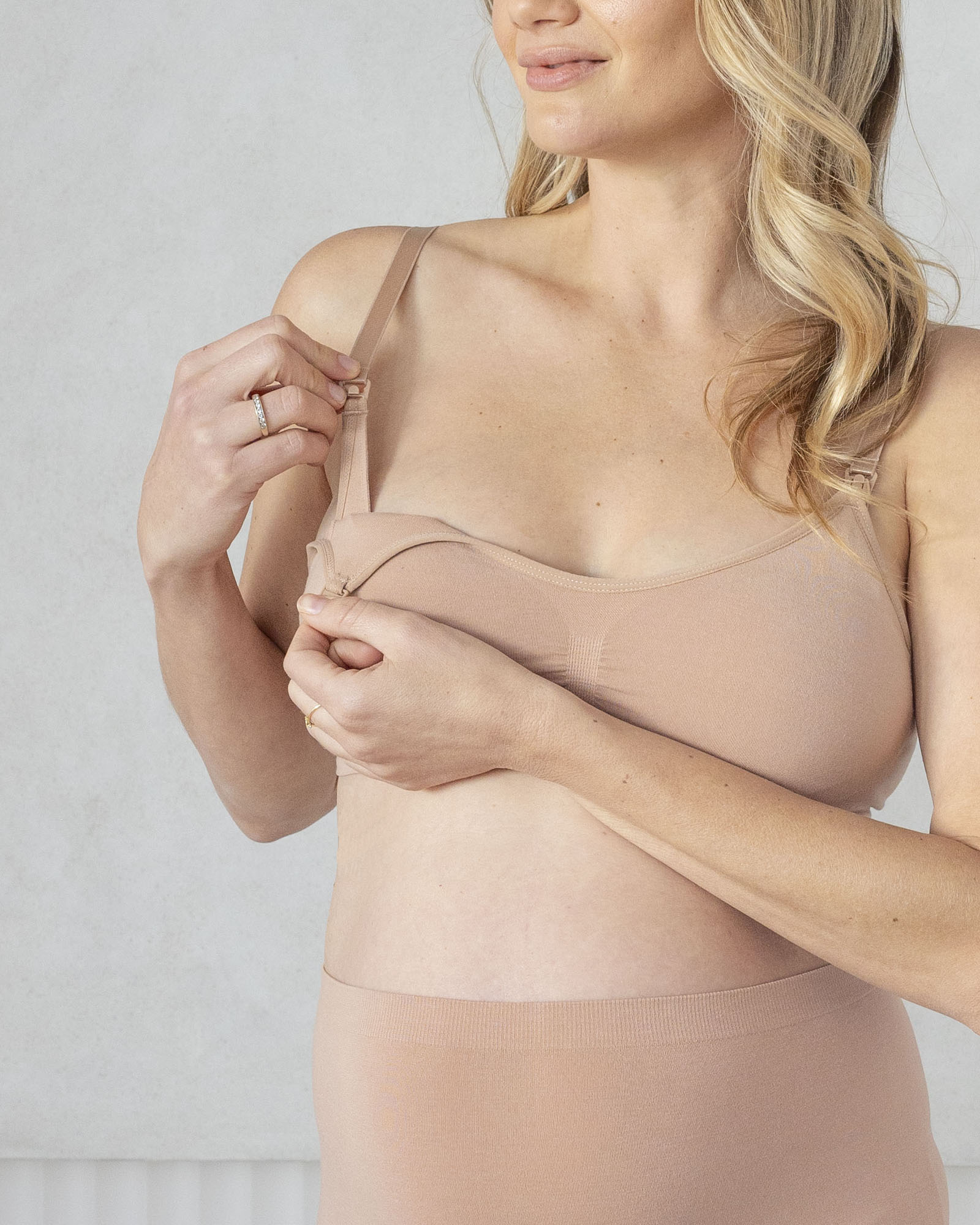
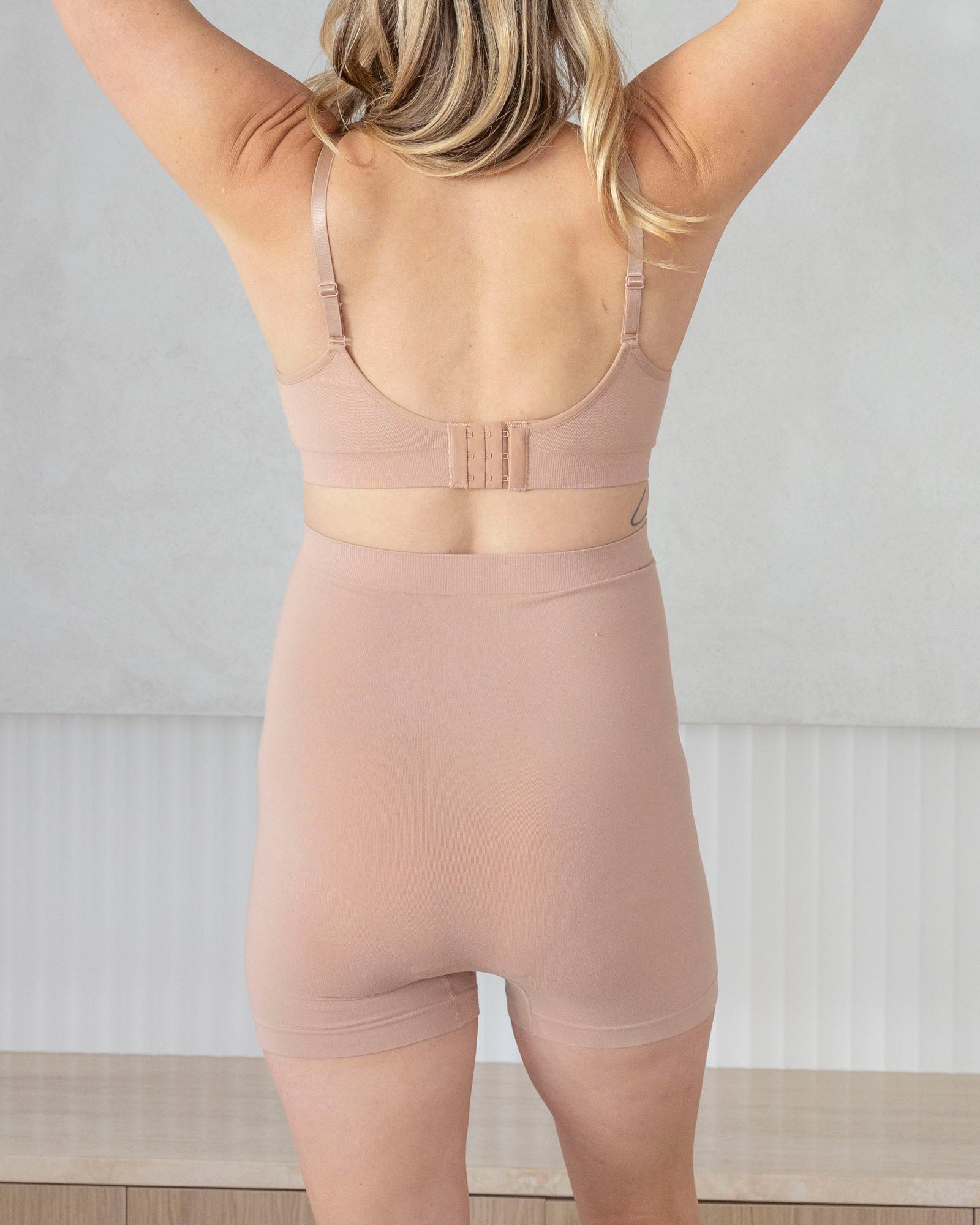
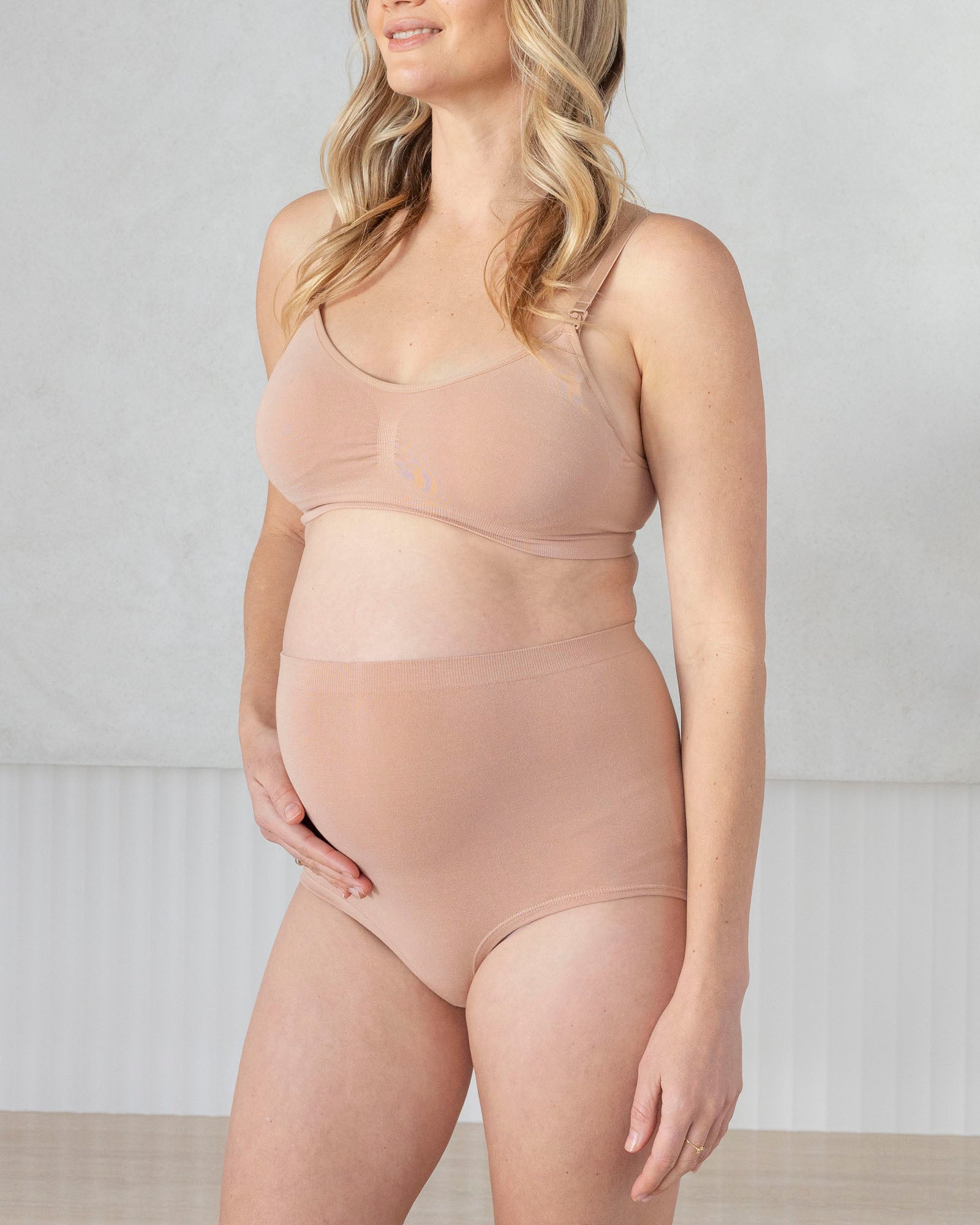
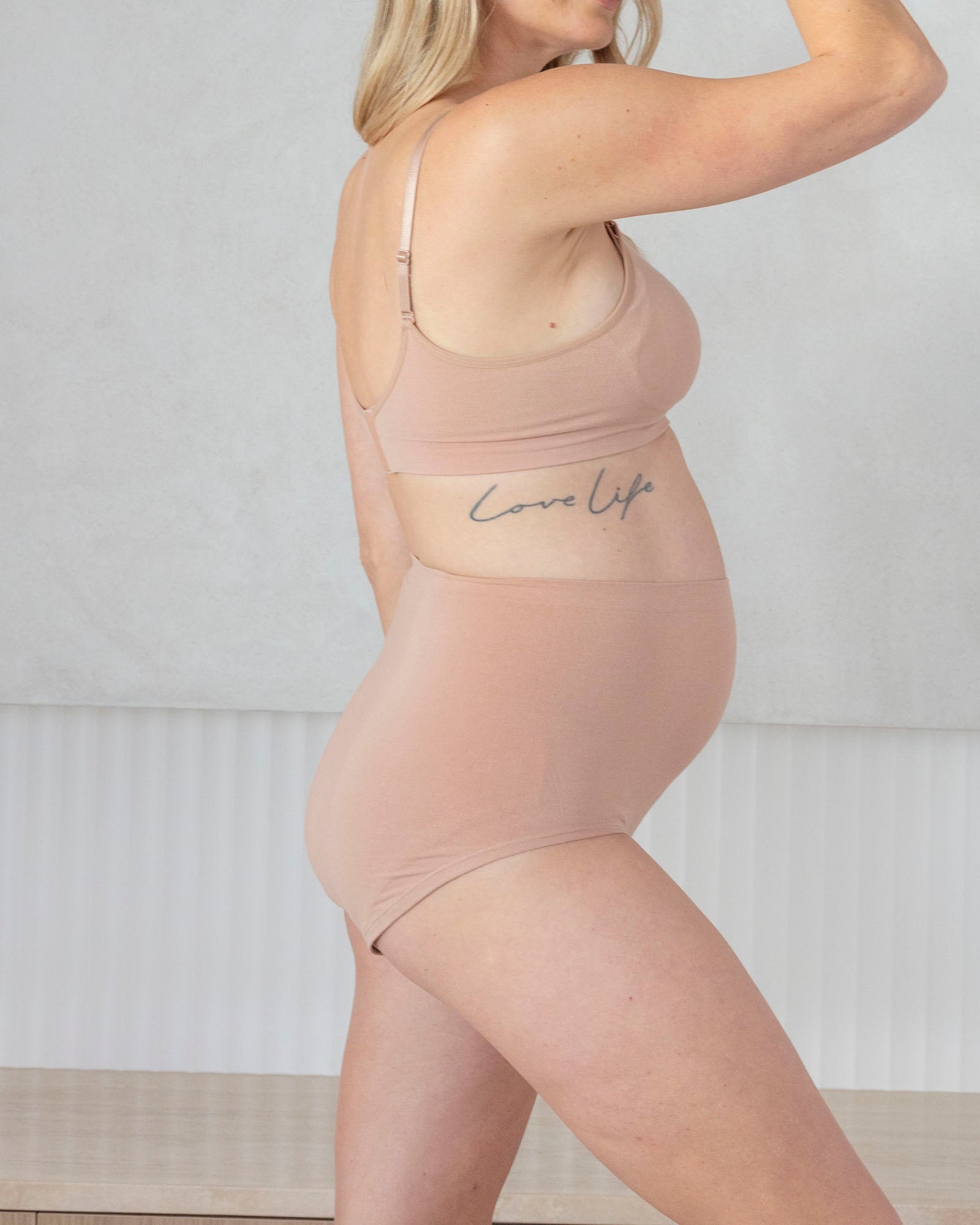
Most women reach for leggings the moment their regular waistbands stop cooperating, usually somewhere around week 12. The problem is that maternity leggings are not all built the same, and the wrong pair will roll down, go sheer when you bend, or dig in exactly where you need room. Here is what actually matters when you are choosing a pair, and how to pick styles that carry you through all three trimesters and beyond.
Over-the-Bump vs Under-the-Bump Waistbands
This is the first decision, and it changes how the leggings feel more than any other single feature. Both styles have a place; it mostly comes down to what stage you are at and how much pressure you want on your belly.
Over-the-bump
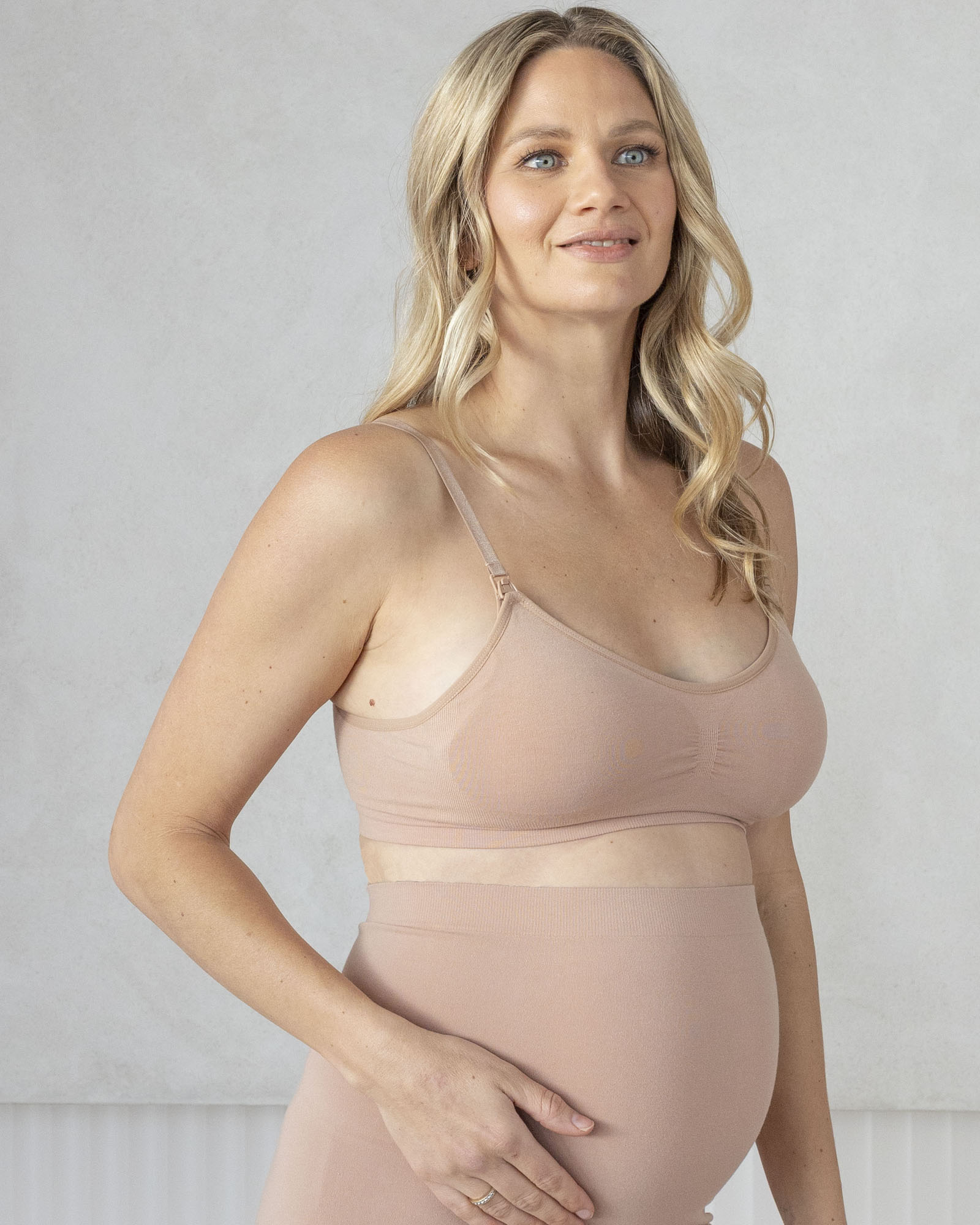
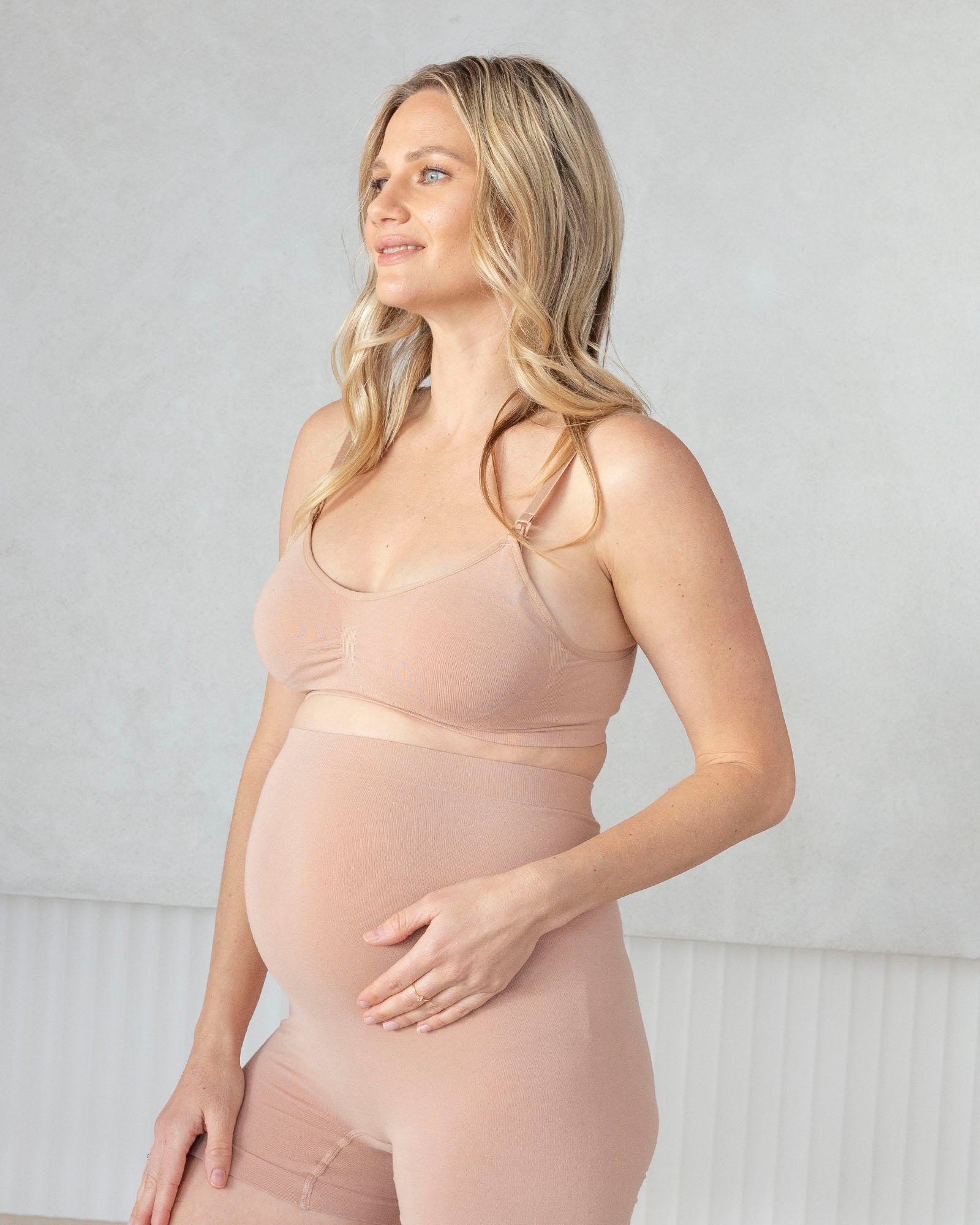
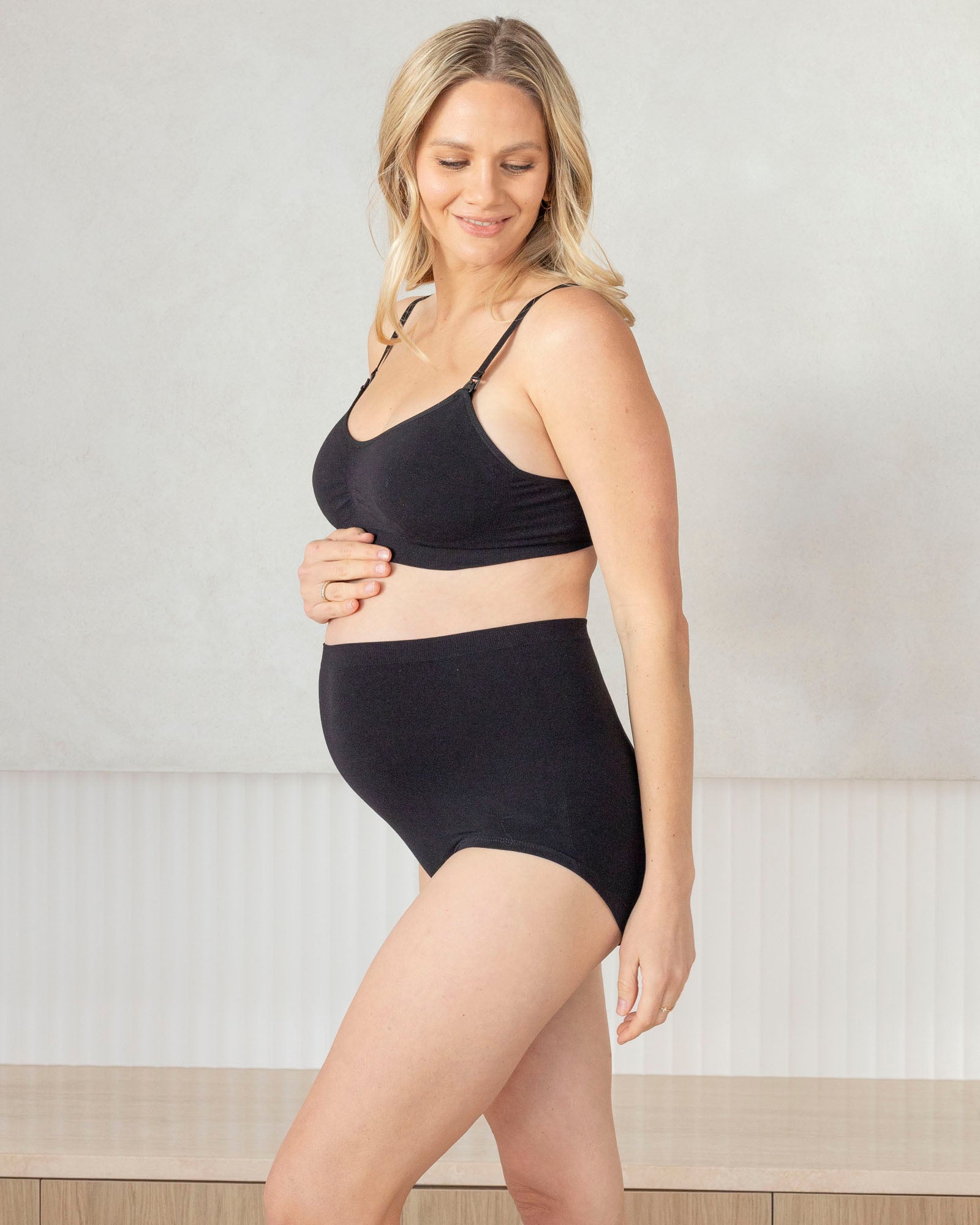
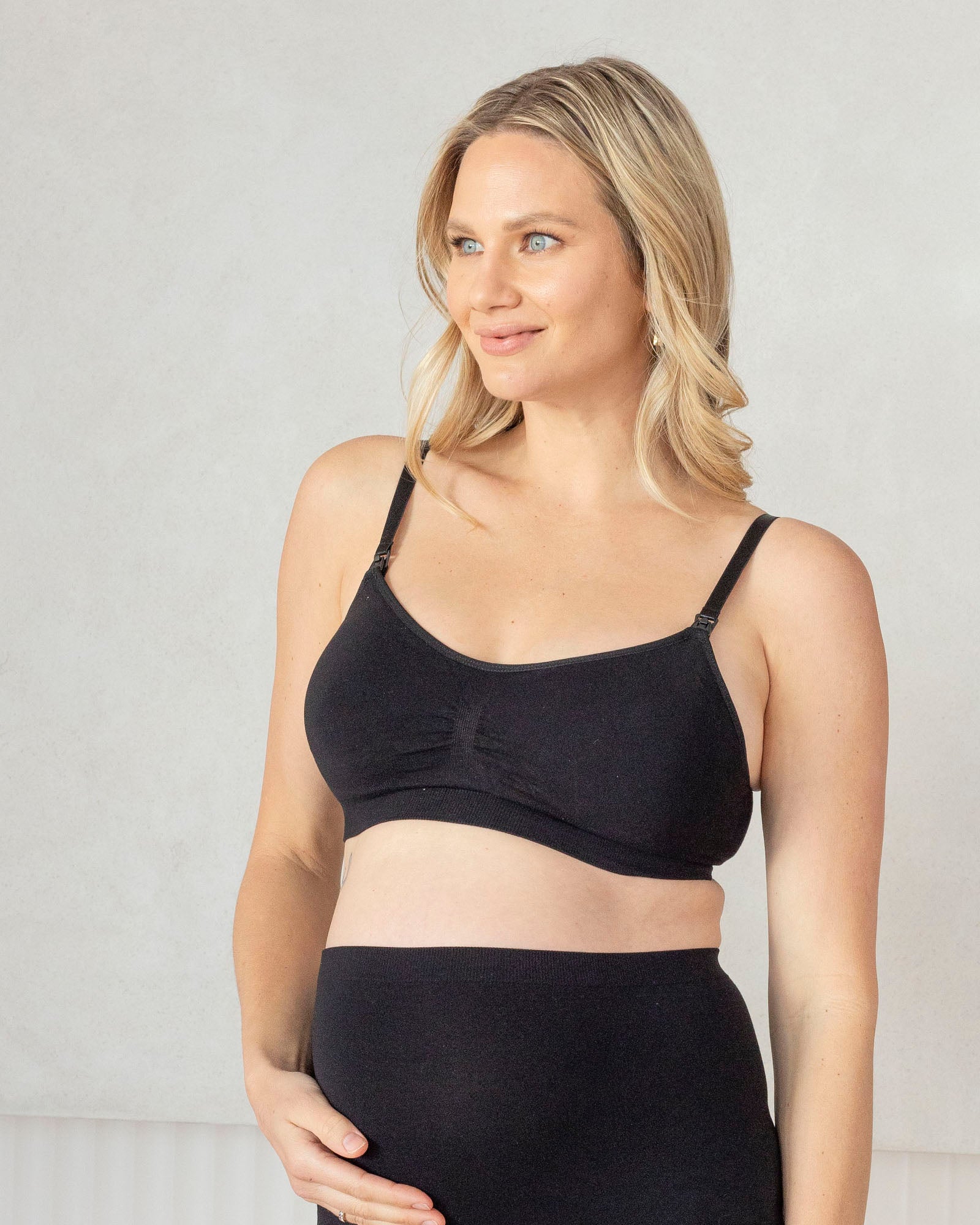
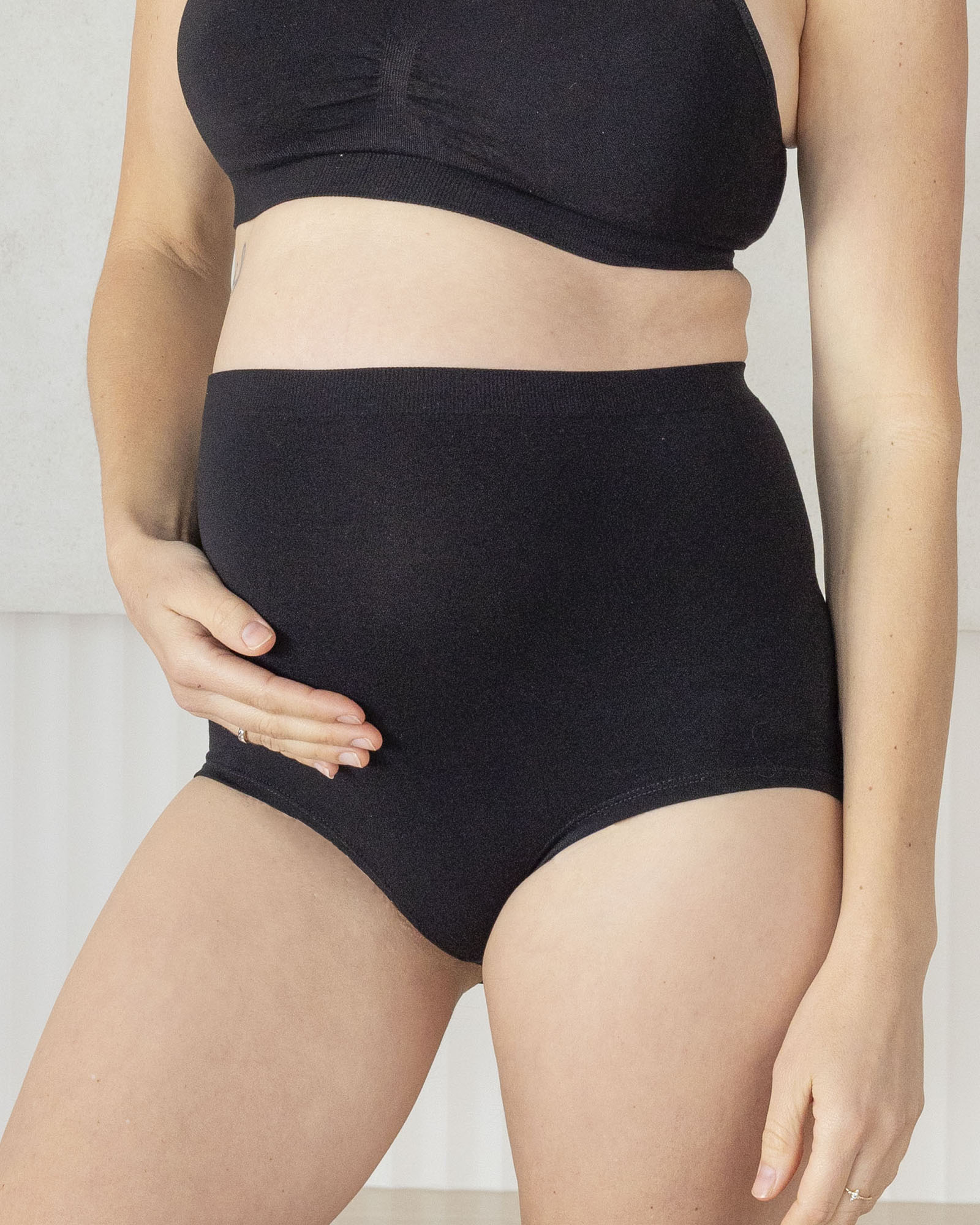
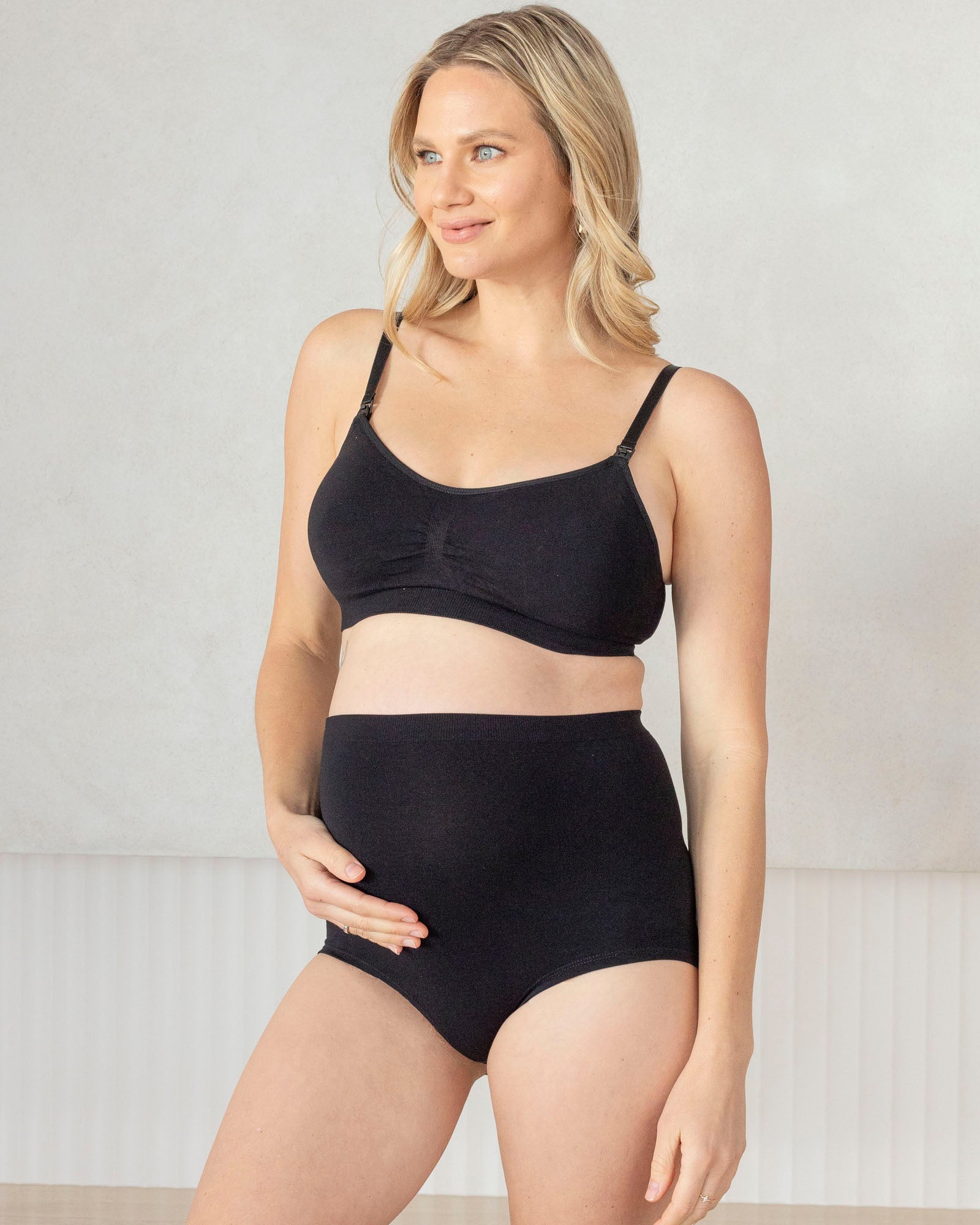
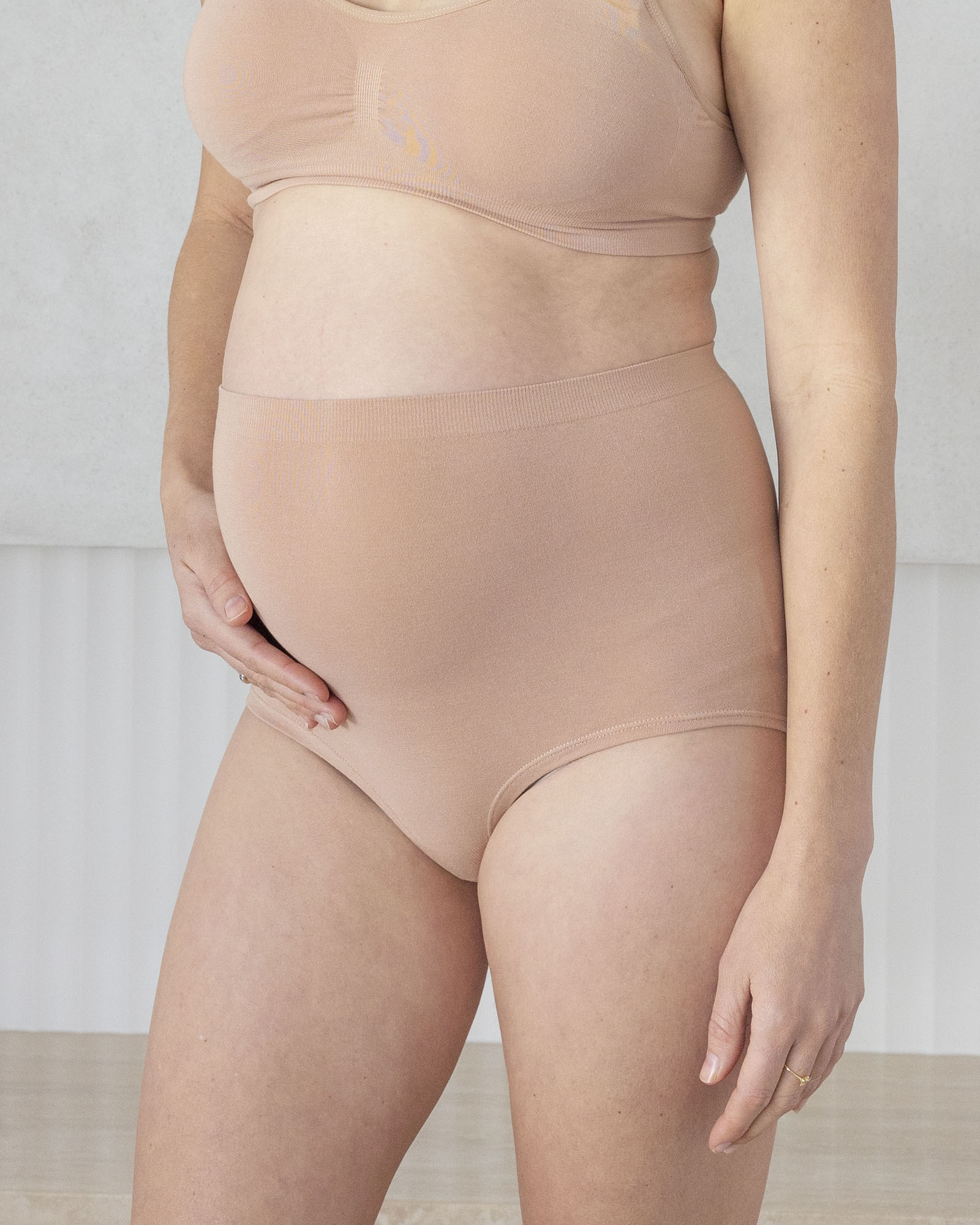
An over-the-bump waistband is a high, stretchy panel that pulls right up over your belly. It gives full coverage, stops your midriff getting cold when tops ride up, and cradles the weight of your bump rather than sitting under it. Most panels can be folded down in the first trimester and pulled up later, which means one pair genuinely works across the whole nine months. By the third trimester, this is the style most women live in.
Under-the-bump
Under-the-bump leggings have a lower rise that sits below your belly. They feel lighter, they are cooler in warm weather, and some women simply dislike any fabric over the bump at all. The trade-off is that as your bump grows, a low waistband has more opportunity to roll down, which means more hitching them back up through the day. They tend to suit early pregnancy and hot Australian summers better than the final stretch.
What to Look for in the Fabric
Stretch is what separates a good pair from a pair you stop wearing after a fortnight. Look for a blend with elastane or spandex through it, ideally with four-way stretch so the fabric moves with you sideways as well as lengthways. A wider waistband spreads pressure more evenly than a narrow one and is far less likely to leave a mark.
Opacity is the other thing worth checking before you buy. Stretch fabric thins as it stretches, and a legging that looks fine on the hanger can go sheer across the thigh once it is pulled over a bump. Denser knits and cotton-rich blends usually hold up better here.
Then there is how it feels against your skin. Skin stretching over a growing belly gets sensitive, and scratchy synthetics become unbearable quickly. Soft, breathable fibres like cotton and bamboo are worth paying for, and the bamboo maternity range is a good starting point if you already know your skin runs sensitive.
Choosing the Right Length and Cut
Length is not just a style call; it changes how practical a pair is for the season and the occasion. Having two or three different cuts in rotation covers far more of your week than three identical pairs.
Full-length leggings
The everyday workhorse. Full-length pairs layer under dresses and long tops, work in cooler months, and read as neat enough for most casual settings. Black is the pair you will wear most.
Seven-eighth leggings
Cropped just above the ankle, seven-eighth styles suit warmer weather and shorter frames, and they sit neatly with sneakers or flats without bunching.
Flares and wide leg
Flared and wide-leg maternity leggings have become one of the most-searched styles in Australia, and for good reason. The extra volume through the leg balances a bump visually and dresses the whole outfit up, so they carry a jumper or a blazer far better than a skinny pair. If you want one style that does not look like activewear, this is it.
Bike shorts
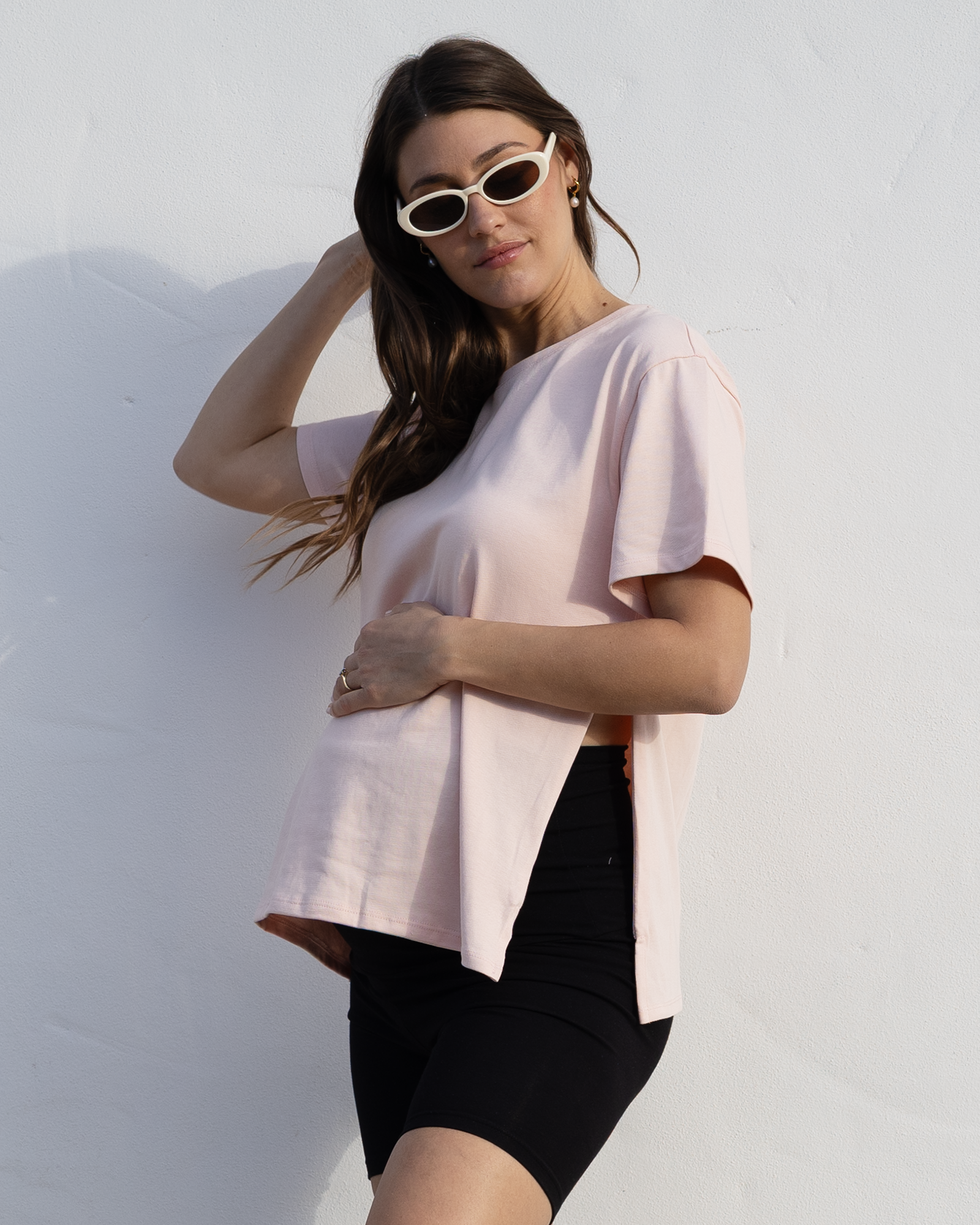
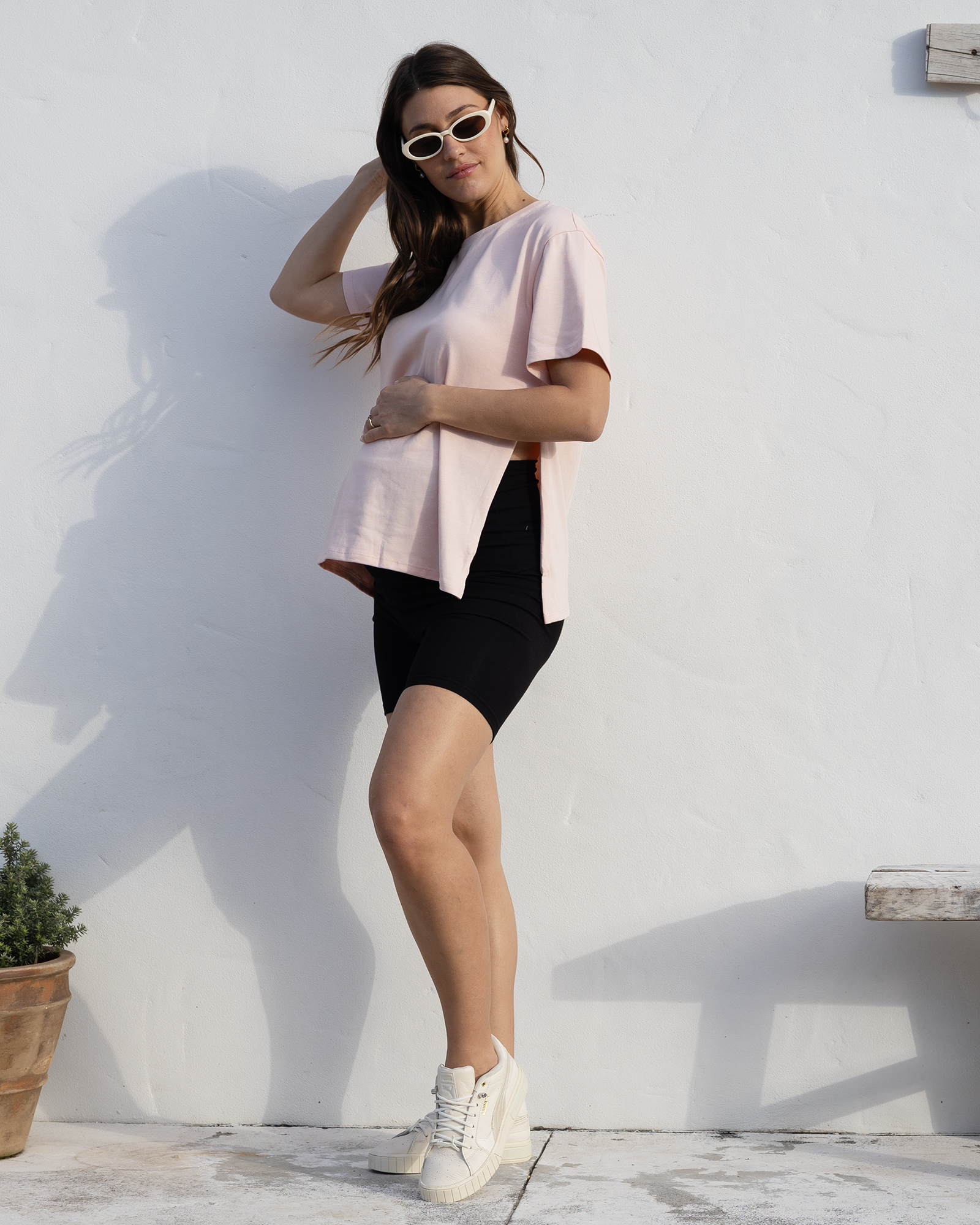
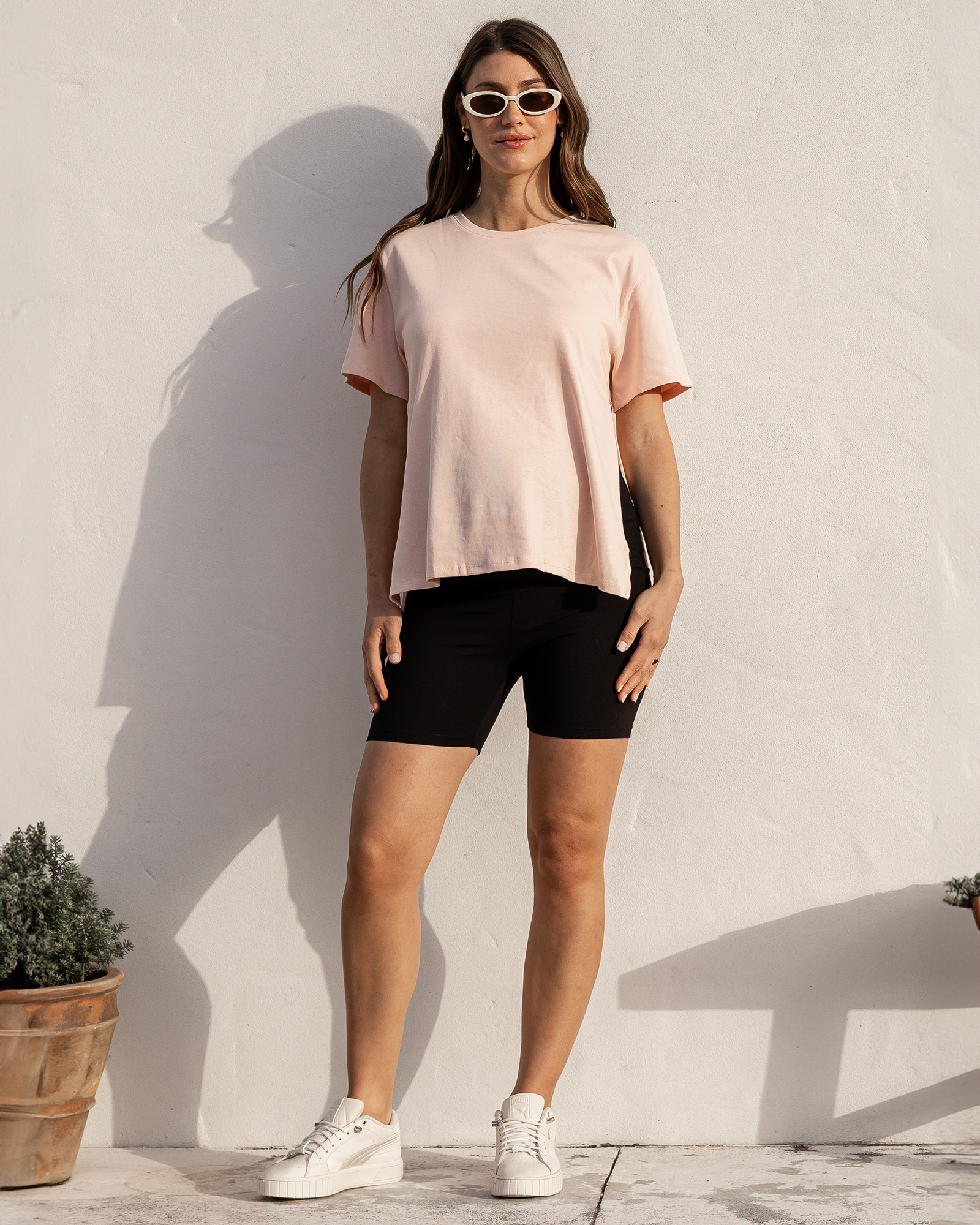
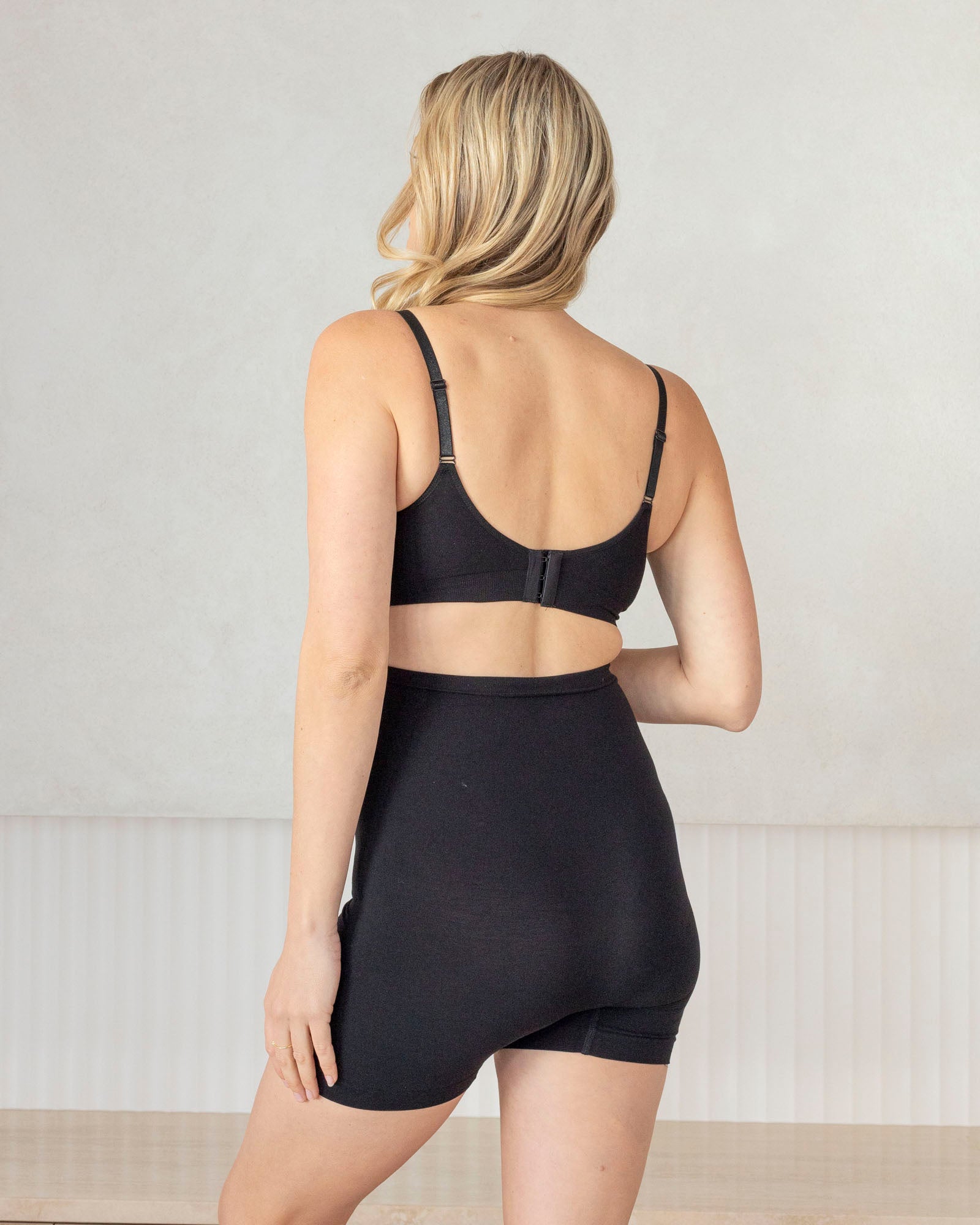
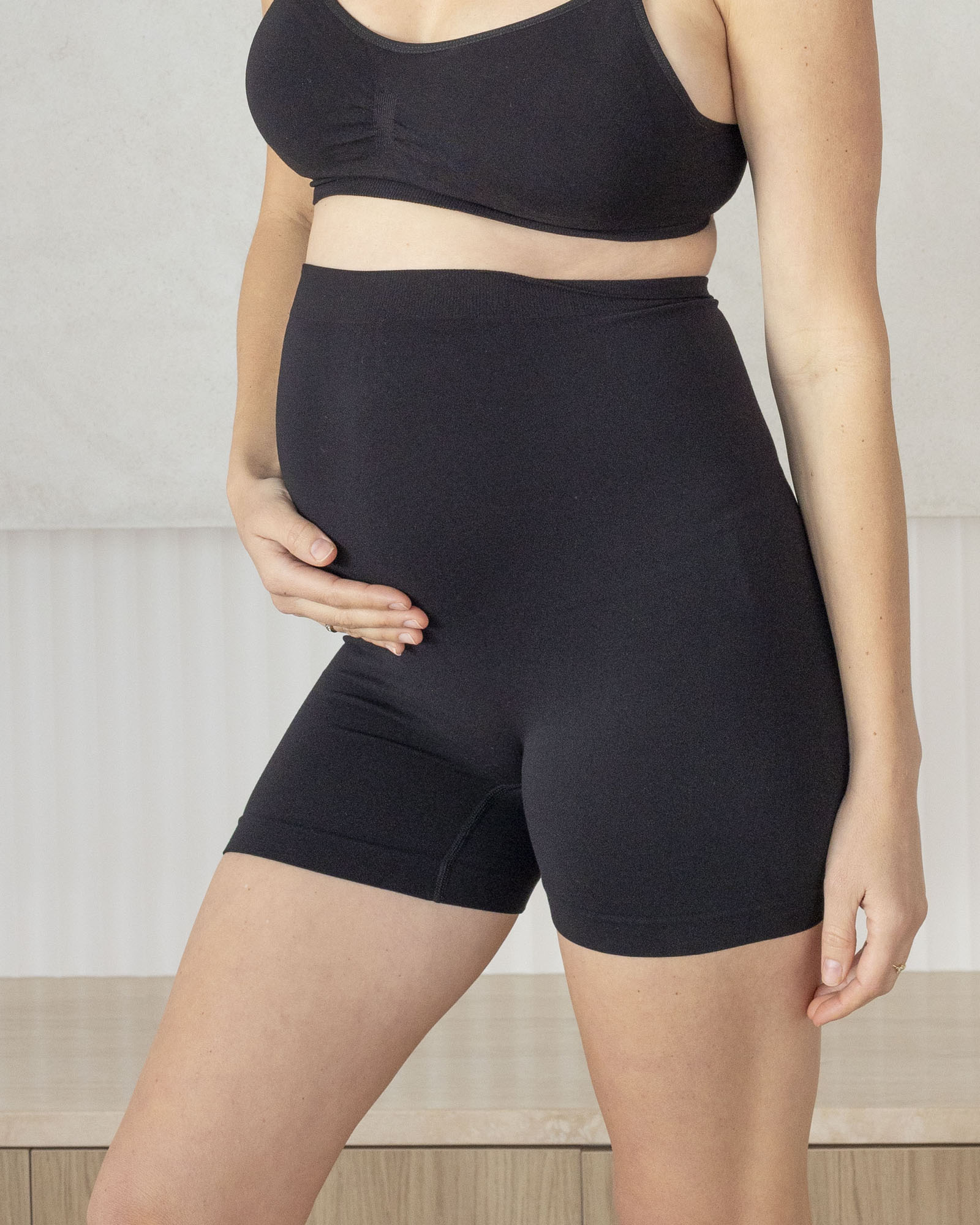
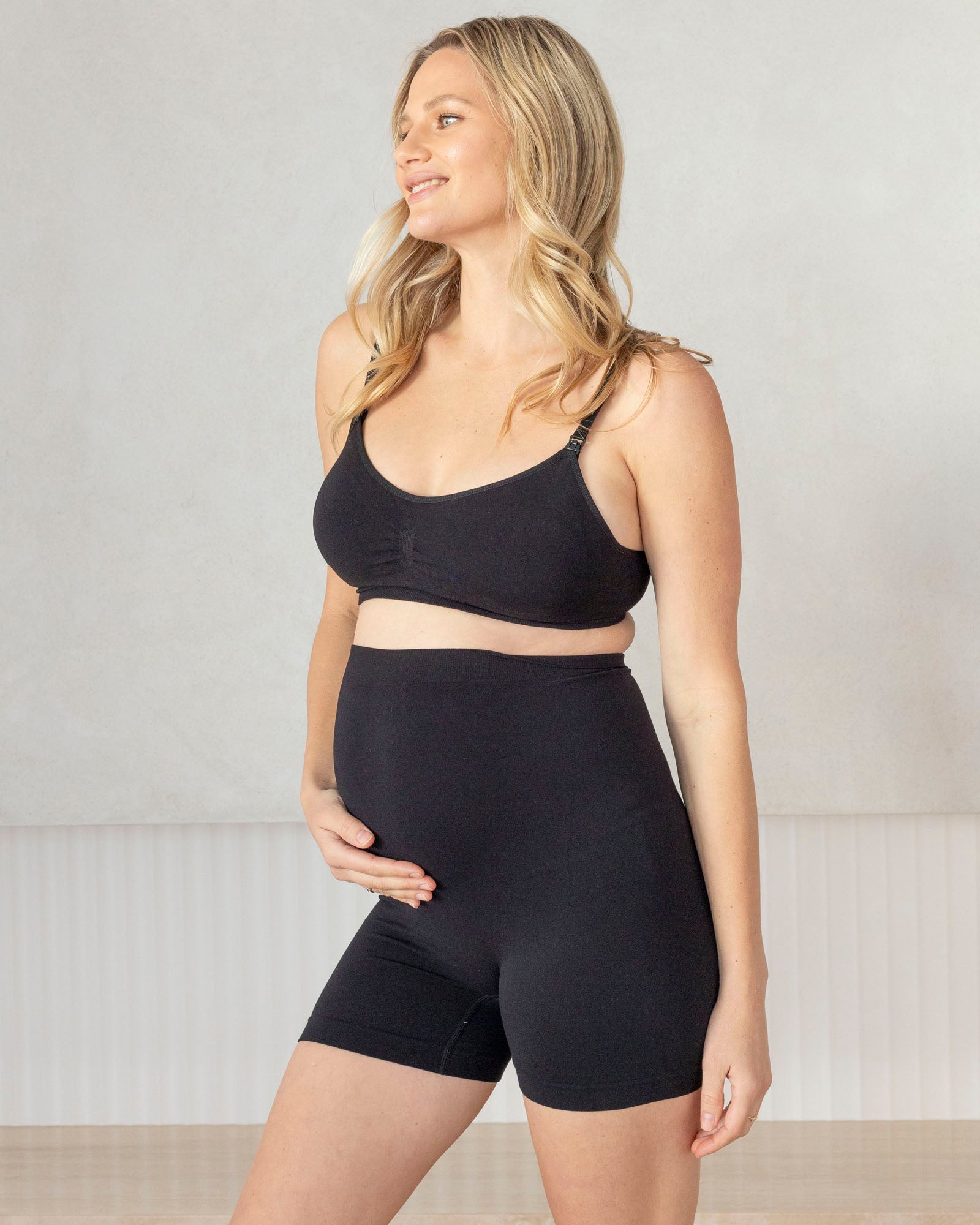
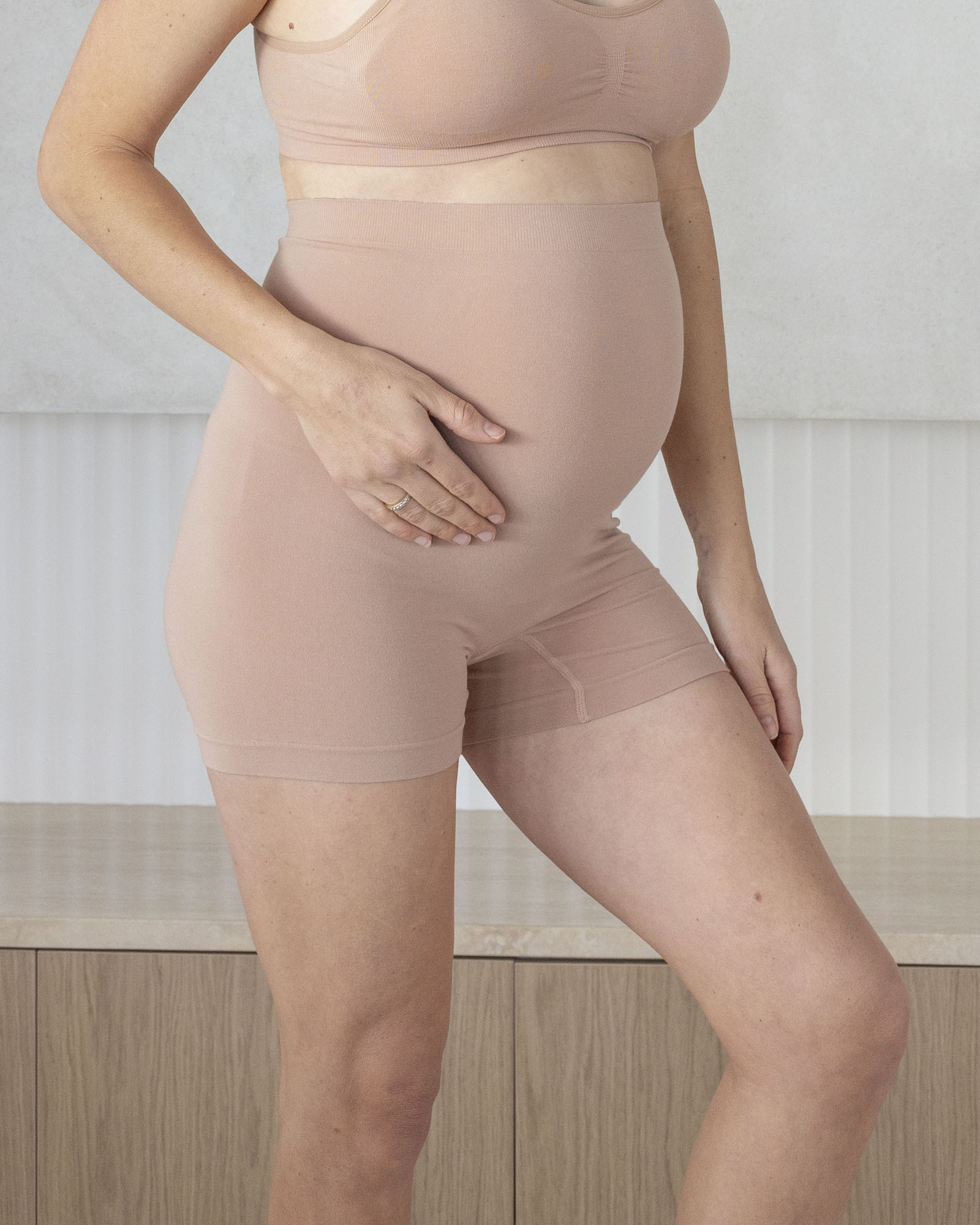
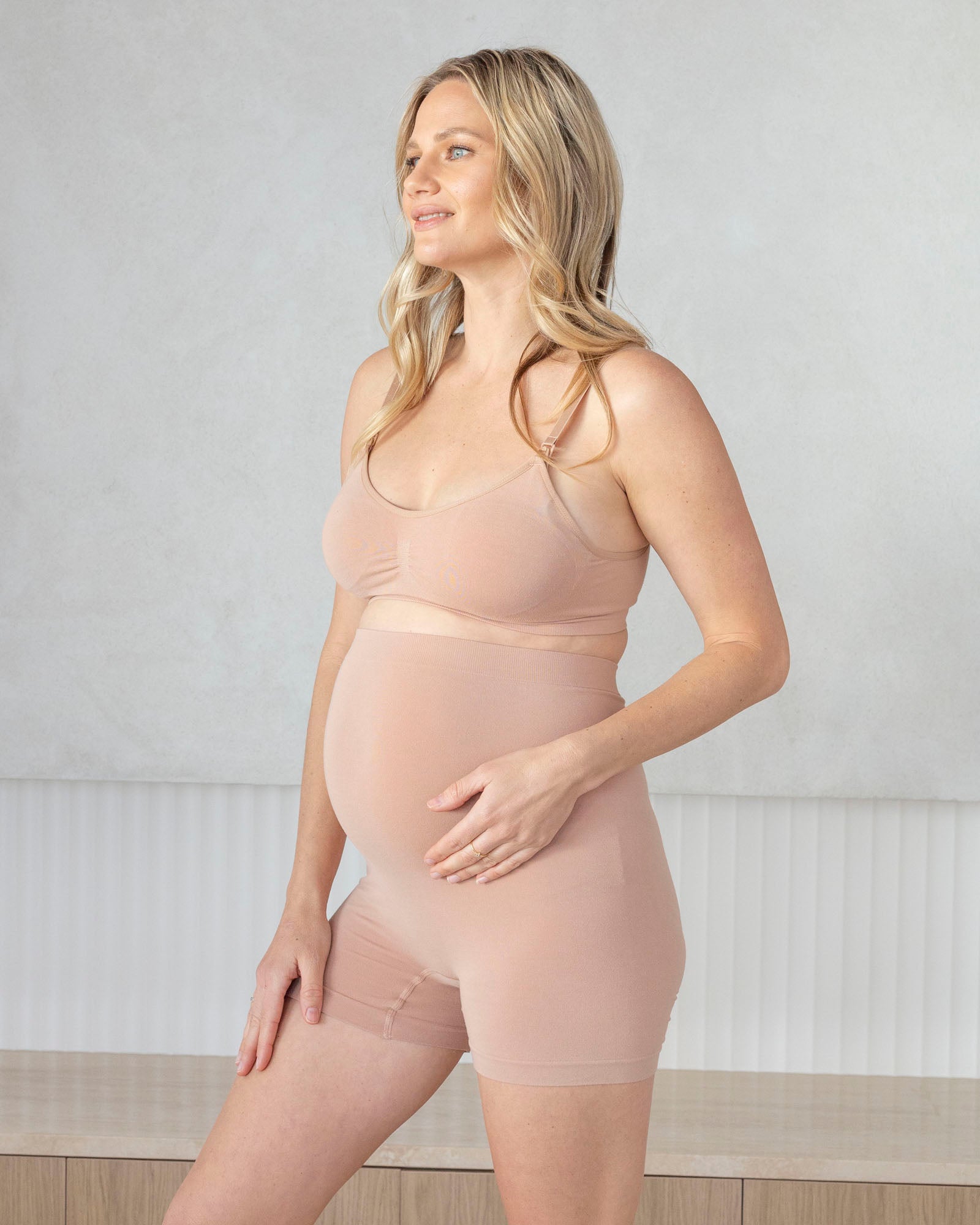
Bike shorts do double duty in summer; worn on their own with an oversized tee, or underneath dresses to stop thighs rubbing on hot days. They are also the easiest style to pull on when bending gets difficult.
Maternity Tights vs Maternity Leggings
In Australia the word tights gets used two ways, and it is worth knowing which one you are shopping for. Sheer or opaque hosiery with a bump-friendly panel is what you want under a work dress in winter. Thicker performance tights are closer to maternity activewear and are built for walking, prenatal yoga or the gym, often with more supportive fabric through the waistband. If you are shopping for warmth under a dress, look for hosiery. If you are shopping for movement, look for activewear styles.
When to Start Wearing Them, and What Happens After Birth
There is no fixed week. Most women find their regular waistbands stop working somewhere between weeks 10 and 14, and bloating in the first trimester often brings that forward. Buying one good pair early is a better use of money than buying five pairs in a panic later; our guide on when to buy maternity clothing goes through the timing in more detail.
The other thing worth factoring in is the fourth trimester. Over-the-bump styles with a fold-down panel remain some of the most comfortable things to wear in the weeks after birth, when your regular clothes still do not fit and you want something soft and forgiving. Two pairs bought in pregnancy will usually still be in rotation months later.
Shop the Look
Angel Maternity's maternity leggings come in full-length, seven-eighth, bootcut, wide-leg and bike short styles in soft bamboo and cotton blends, with free shipping across Australia on orders over $150. Pair them with maternity knit pants for a rotation that covers everything from the school run to working from home.